You prayed. You waited. You prayed again, and the answer still has not come. The job you needed did not open. The test result did not improve. The child you longed for did not arrive. The marriage you hoped would turn did not turn, at least not yet. And somewhere along the way, the silence itself became the hardest part. It is one thing to receive a no. A no hurts, but at least you know where you stand. It is another thing entirely to live in the long middle, where God has not said yes and has not said no, and every morning you wake up to the same unanswered prayer and the same unchanged circumstance. If that is where you are, you are not faithless for feeling the weight of it. You are human, and you are in company with some of the most faithful people who ever lived.
Waiting is not a footnote in the life of faith. Scripture gives it real space and real dignity, because God knows what waiting does to a person. It stretches you and exposes what you actually trust. It forces you to decide whether you believe God is good when you cannot see what He is doing. Waiting well is not the same as waiting comfortably. You can be faithful and still be tired. You can trust God and still cry on the drive home from another appointment that changed nothing.
David knew this kind of waiting from the inside. Psalm 27 is not the song of a man sitting in a quiet room thinking pleasant thoughts about God. It is the prayer of a man surrounded by trouble, with enemies pressing in and the threat of real harm close at hand. He opens with confidence, and it is a confidence worth sitting with. “The Lord is my light and my salvation; whom shall I fear? The Lord is the stronghold of my life; of whom shall I be afraid?” Those are not the words of a man who has never been afraid. David does not pretend the danger is gone. He names it plainly in the verses that follow. Evildoers assail him. An army encamps against him. War rises against him. His father and mother, he says, may forsake him. This is not abstract trouble. This is the language of a man who knows what it feels like to be outnumbered and alone, and still he says, “I will be confident.” David does not wait until the battle is over to declare his trust. He declares it in the middle of the battle, and that is exactly what waiting asks of you.
The heart of Psalm 27 is a single desire, and it is worth hearing slowly. “One thing have I asked of the Lord, that will I seek after: that I may dwell in the house of the Lord all the days of my life, to gaze upon the beauty of the Lord and to inquire in his temple.” In a season of waiting, it is easy for the one thing you want to become the only thing you can think about. The job becomes the one thing. The diagnosis becomes the one thing. The child becomes the one thing. The restoration of your marriage becomes the one thing, and everything else in your life starts to orbit around it. David still asks for deliverance, plainly, but he puts something above it. He wants God Himself, not only what God can give him. That reordering does not make the waiting disappear, and it does not mean you should stop asking for the thing you need. It means the thing you need stops being the measure of whether God is good to you. If God Himself is the one thing, then even a long wait cannot take away the ground you stand on. That is a hard word when you are tired, and it is also a freeing one, because it means your hope does not rise and fall with the next phone call or the next test result.
Then Psalm 27 ends where so many waiting people live. “Wait for the Lord; be strong, and let your heart take courage; wait for the Lord!” David repeats the command, and the repetition matters. He says it twice, as if he knows you will need to hear it again. Waiting is not passive in this psalm. It is tied to strength and courage, which tells you that waiting is work. It takes strength to stay when leaving looks easier. It takes courage to keep praying when prayer has not yet produced the result you wanted. And notice that David addresses his own heart. He is not preaching to a crowd here. He is talking to himself, the way you sometimes have to talk to yourself on the nights when faith feels thin. He commands his own heart to take courage, and that is a practice worth borrowing. There will be days when courage does not arrive on its own, and you will have to speak it to yourself out loud before you feel it. That is how faith often works in a long season. You speak the truth first, and the feeling follows, sometimes much later than you would like.
If David gives you the voice of waiting, the prophet Jeremiah gives you the reason waiting can still hold hope. Lamentations 3 is one of the darkest chapters in the Bible, and that is precisely why its most hopeful verses carry so much weight. Jeremiah is writing out of ruin. Jerusalem has fallen. Everything he loved has been broken. He describes himself as a man who has seen affliction and walks in darkness without light. He does not soften any of it. And then, in the middle of that grief, he writes the words that have carried suffering people for thousands of years. “The steadfast love of the Lord never ceases; his mercies never come to an end; they are new every morning; great is your faithfulness.” Jeremiah does not say that his circumstances have improved. They have not. He does not say that the city has been rebuilt. It has not. He says that the love of God has not run out, and that every morning brings a fresh supply of mercy. That is a different kind of hope from the hope that everything will turn around soon. It is the hope that God is still present and still faithful even when nothing around you has changed.
Jeremiah goes on to draw the conclusion that waiting people need most. “The Lord is my portion, says my soul, therefore I will hope in him. The Lord is good to those who wait for him, to the soul who seeks him. It is good that one should wait quietly for the salvation of the Lord.” There is a quietness in these verses that stands in contrast to the noise of anxious waiting. Anxious waiting is loud inside you. It rehearses conversations that have not happened. It refreshes the inbox. It runs the numbers again. It lies awake making plans for outcomes you cannot control. Quiet waiting is not the absence of feeling. Jeremiah felt everything and wrote it all down. Quiet waiting is the decision to stop striving for control and to rest in the character of God instead. A portion is what sustains you. It is your daily share, your provision for today. When Jeremiah says the Lord is his portion, he is saying that God is what he lives on now, in this day, in this ruin, before any rescue arrives. That is a word for the couple wondering how this month will be paid for and for the husband who does not know whether his marriage will survive. Your portion for today is not the answer you are waiting for. Your portion for today is God, and He has not withdrawn Himself from you.
Habakkuk takes the waiting a step further, because he does not only wait. He argues. He complains. He asks God the questions that polite faith sometimes avoids. His book opens with a cry that many waiting people will recognize. “O Lord, how long shall I cry for help, and you will not hear? Or cry to you ‘Violence!’ and you will not save?” Habakkuk is not being rebellious. He is being honest, and God does not rebuke him for it. God answers him, though the answer is not what Habakkuk expected. God says He is doing a work that Habakkuk would not believe even if it were told to him. It asks you to trust that God is at work in ways you cannot yet see. Habakkuk then does something that every waiting person should learn to do. He positions himself to watch. “I will take my stand at my watchpost and station myself on the tower, and look out to see what he will say to me, and what I will answer concerning my complaint.” He does not walk away from God in his frustration. He stays at his post. He keeps watching. He keeps listening. That is the posture of honest waiting. You bring your complaint, you speak it plainly, and then you stay. You do not abandon the watchpost because the answer is slow.
God’s reply to Habakkuk contains one of the most quoted promises about waiting in all of Scripture. “For still the vision awaits its appointed time; it hastens to the end, it will not lie. If it seems slow, wait for it; it will surely come; it will not delay.” There is a tension in that verse that you need to hold honestly. God says the vision has an appointed time, and He also says that if it seems slow, you should wait for it. That means slowness is not evidence that God has forgotten you. The vision can seem slow to you and still be exactly on time in God’s calendar. Your sense of timing and God’s sense of timing are not the same, and the gap between them is where most of the pain of waiting lives. You look at the calendar and see months passing while friends move forward, and you wonder whether God has moved you to the bottom of some list. Habakkuk tells you that what seems slow to you is not late to God. The appointed time is real, even when you cannot see it, and the promise is that it will surely come. It does not say it might come. It says it will surely come, and it will not delay beyond the time God has appointed. Your job is not to force the appointed time to arrive sooner. Your job is to remain at the watchpost, faithful and honest, until it does.
Isaiah 40 speaks to the exhaustion that long waiting produces, and it speaks to it with a tenderness that waiting people need. Before the promise, Isaiah asks a question that cuts straight to the heart of waiting. “Have you not known? Have you not heard? The Lord is the everlasting God, the Creator of the ends of the earth. He does not faint or grow weary; his understanding is unsearchable.” When you have waited a long time, it is easy to quietly assume that God has grown tired of your situation, or that He has run out of ideas for it. Isaiah reminds you that God does not faint and does not grow weary. Your repeated prayers have not worn Him out, and your situation is not too complicated for His understanding. The God who created the ends of the earth is not straining to hold your life together. He is everlasting, which means He was God before your waiting began and He will still be God long after it ends.
Then comes the promise that has steadied weary people for generations. “He gives power to the faint, and to him who has no might he increases strength. Even youths shall faint and be weary, and young men shall fall exhausted; but they who wait for the Lord shall renew their strength; they shall mount up with wings like eagles; they shall run and not be weary; they shall walk and not faint.” Notice who this promise reaches. It reaches the faint, those who have no might left, those who are exhausted. If you are reading this and you feel like you have nothing left, you are exactly the person this promise addresses. And notice the shape of the renewal. Much of the Christian life in a waiting season is walking, putting one foot in front of the other on an ordinary day, making dinner, going to work, showing up for your spouse. Walking and not fainting is also renewal, and the strength for it comes from the same source as the strength for the soaring days.
Now bring all of this down to the ground where you actually live, because waiting is never abstract. It always has a name and a face. Maybe you and your spouse have been waiting for a job. You did the interviews, you were told you were a strong candidate, and then the position went to someone else while the savings thinned and the rent stayed due. The waiting there eats at confidence and starts arguments over small things because the big thing feels out of control. Or maybe you are waiting for healing. You have prayed over a body that keeps breaking down, or you have sat beside a spouse whose illness will not lift, and every new treatment brings a fresh round of hope followed by the same flat result. The waiting there is physical and emotional at once. You are tired in body and spirit, and well meaning advice to stay positive feels thin. Or maybe you are waiting for a child. You have watched friends announce pregnancies while your own arms stay empty, and every month brings a grief that is hard to explain to people who have not lived it. The waiting there is tender and private, and it touches the deepest parts of a marriage, because it raises questions about the future you pictured together and whether that future will ever arrive.
Or maybe you are waiting for a marriage to turn. You are still in the same house, still sharing the same bed or the same silence across it, and you have prayed for change until prayer itself feels like a chore. You have tried the conversations and the counseling, and the distance between you has not closed the way you hoped. Waiting in a marriage is its own kind of loneliness, because the person you are waiting with, or waiting for, is right there, and yet the closeness you long for feels far away. In every one of these situations, the waiting is not a theory. It is Tuesday. It is the bill on the counter. It is the empty chair at the table. It is the conversation that did not happen again. And in every one of these situations, the temptation is the same. The temptation is to believe that because God has not acted yet, He will not act at all, or that because He has not acted on your timeline, He has stopped caring about your life. That is the lie that waiting tells, and it is a lie you must learn to recognize. Slowness is not the same as absence, though it can feel exactly like it on the hard days.
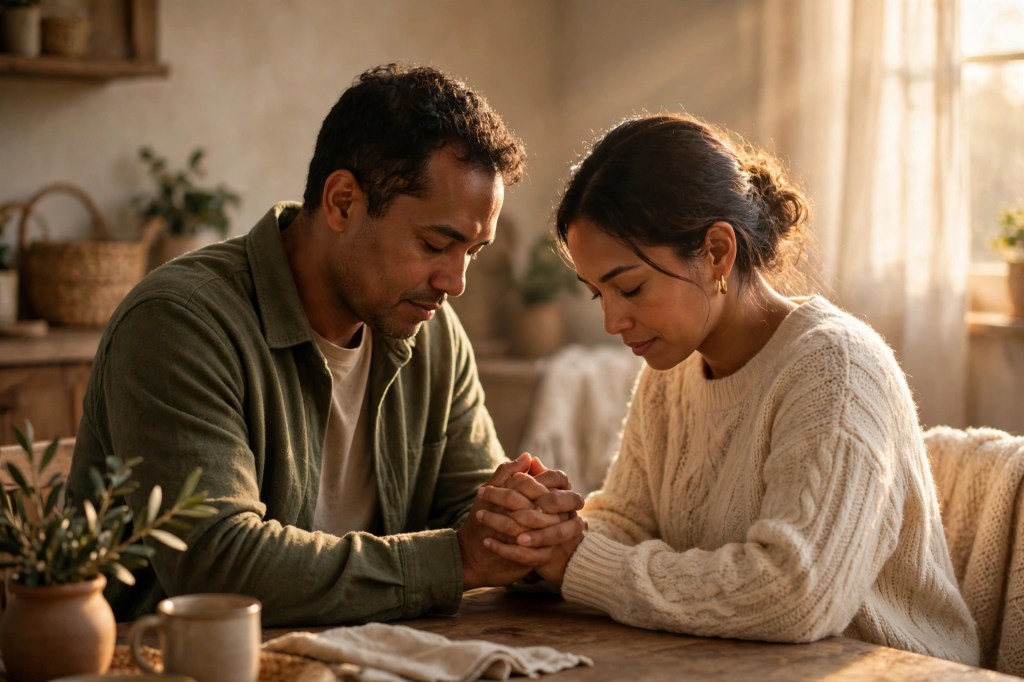
So what do you actually do while you wait? First, keep praying, and keep it honest. Habakkuk shows you that God can handle complaint. You do not need to dress up your prayers to make them acceptable. Tell God that you are tired, that the wait is long, that you do not understand, and what you are afraid of, in plain words. Honest prayer does not weaken faith. It exercises it, because it keeps you talking to God instead of going quiet on Him. The most dangerous thing in a waiting season is the slow drift into silence, where you stop bringing the matter to God at all because you have decided He is not listening. Stay at the watchpost. Keep the conversation open, even when your prayers are short and rough around the edges. A short honest prayer is worth more than a polished performance you do not mean.
Second, stay faithful in the small things that are actually yours to do. Waiting is not an excuse to stop living, and it is not a reason to neglect the marriage, the work, or the people right in front of you. If you are waiting for a job, keep applying, keep preparing, keep showing up with diligence in whatever work you have today. If you are waiting for healing, keep the appointments, keep caring for the body you have, keep letting people help you instead of carrying everything alone. If you are waiting for a child, keep loving your spouse in the present, keep building a marriage that is good even while the nursery is empty. If you are waiting for a marriage to turn, keep doing the next right thing, the apology and the kindness offered again, even when the response is not what you hoped. Faithfulness in small things will not earn the answer, but it keeps you rooted while you wait, so that the waiting does not hollow out everything else in your life. David waited years between being anointed king and sitting on the throne, and those years formed him. Your waiting years are forming you too.
Third, let other people into the wait. Waiting isolates you, and isolation makes everything worse. It convinces you that you are the only couple still stuck, the only family still praying for the same thing, the only person God seems to have overlooked. You are not. Find one trusted person, or one couple, who can know the real situation and pray with you honestly, not with easy answers but with steady presence. Tell your spouse what the waiting is doing to you, not as an accusation but as a confession, so that you can carry it together instead of carrying it alone in the same house. You need people who will remind you of Psalm 27 on the days you cannot remember it yourself and stand at the watchpost with you when you are too tired to stand alone. Let them in. Waiting was never meant to be done in hiding.
Fourth, build rhythms that anchor you to what is true rather than to what you feel in the moment. Feelings in a waiting season swing hard. One good day can make you feel like the answer is near, and one bad day can make you feel like it will never come. Rhythms steady you. Read a psalm aloud in the morning before you check your phone. Pray together as a couple at night, even briefly, even when the words are few. Keep gathering with God’s people, even on the Sundays when you would rather stay home because worship feels hard. They are anchors, not levers, and they will not manipulate God into answering faster. They keep you near the truth that God is faithful when your feelings are telling you a different story, and over a long season, that nearness matters more than any single emotional high.
And fifth, release the timeline. This is the hardest practice of all, and it is the one Habakkuk points you toward most directly. You can want the answer deeply and still release your grip on when it must come. Releasing the timeline does not mean you stop hoping. It means you stop demanding that God keep your schedule, and you trust that His appointed time is real even when it is not visible. Pray the prayer that says, in effect, I want this, I am asking for it, and I trust You with when and how. You may need to pray it many times before you mean it. Pray it anyway. Each time you release the timeline, you loosen the grip that waiting has on your joy, and you make room for God to work in ways that your timeline never included. Some of the greatest gifts in a marriage come through a door you did not expect, and you will miss them if your eyes are fixed only on the door you picked.
There is one more thing waiting teaches that is easy to miss, and it has to do with who you become while you wait. A long wait strips away the illusion that you are in control, and that stripping, painful as it is, is one of the most honest experiences a person can have. It teaches you dependence in a way that comfort never will. It teaches you that your marriage does not rest on your ability to fix everything, but on God’s ability to sustain you both. It teaches you compassion for other waiting people, because once you have lived in the long middle, you will never again offer cheap answers to someone who is still waiting. Waiting, endured with God, makes you gentler and more honest toward the people around you. That is a real fruit of the wait, and it matters, because the people God puts in your path need someone who understands the middle.
As this week begins, take the waiting you are carrying and bring it back to God with fresh honesty. Name it and speak it. Place it before the God who does not faint or grow weary, whose mercies are new every morning, whose appointed time is sure even when it seems slow. Then do one concrete thing this week that waiting has been keeping you from doing. Cook a real meal together instead of eating apart in silence. Take a walk together and talk about something other than the thing you are waiting for. Apply for the job, make the appointment, have the conversation, take the step that is yours to take, and leave the outcome you cannot control in hands far more capable than yours. Start by choosing one small act of faithfulness today, not a grand gesture but a real one, and let that be your answer to the silence. And then sit with this question, honestly, before God and before each other. If the answer never came in the way you pictured it, would God Himself still be enough for you, and what would it look like to live this week as if that were true?
Get the free 7-day couples devotional
If this article stirred something, do not let it fade by tomorrow. Closer in 7 Days is a short devotional for married couples: ten minutes a day, Scripture, honest conversation, one small action. It is free, and it might be the restart your marriage needs.
No spam. Unsubscribe anytime.


Leave a Reply